
When Grief Freezes Time
How the dead can remain more present than the living

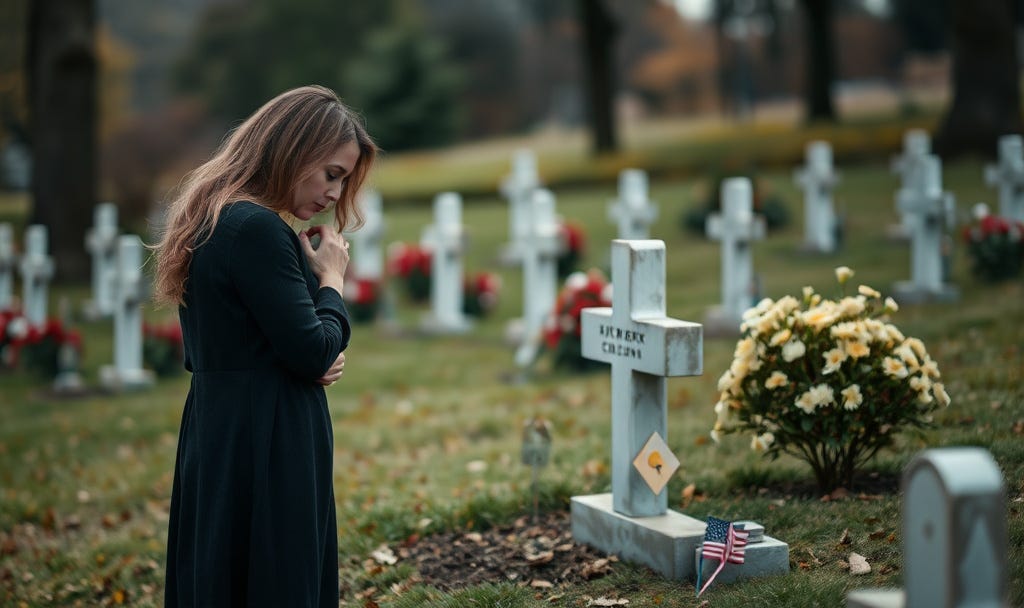
Grief does not end at the funeral. Sometimes it deepens over years, becoming woven into identity, memory, and even spirituality itself. In the wake of the tragic events reported this week in Brighton, I found myself reflecting not on psychic phenomena, but on something far more human: the way loss can transform the dead into perfect figures in the mind, and how difficult it can become for the living to continue their own lives afterwards.
A reflection on bereavement, idealisation, and the delicate balance between honouring the dead and remaining fully alive.
The tragic news surrounding the drowning of three sisters on Brighton beach this week has stayed with me. I am not speaking here as a psychic, nor am I claiming any special knowledge about what happened beyond what has appeared in the press. What it brought to mind instead was my experience of helping people live with grief.
Reports suggest that the sisters had also recently lost their mother. When a parent dies, particularly a deeply loved parent, the emotional shock can be overwhelming. In families with strong religious beliefs about the afterlife, grief can sometimes become entangled with ideas of reunion, perfection, and sacrifice. We are often taught not to speak ill of the dead, and so the person who has passed away can slowly become elevated into something almost saint-like in memory.
That can create a painful emotional contradiction. The dead are gone, yet psychologically they become more present than ever.
For those left behind, especially children or young adults, the longing to reconnect with a lost parent can become extraordinarily powerful. It is difficult to imagine the devastation this tragedy will cause for the surviving members of the family, who were already grieving a terrible loss.
Recently I sat with a woman who was still grieving for her father and two brothers. As she spoke, the emotions were so immediate that it felt as though the losses had happened yesterday. Her father had actually died thirty-five years ago.
I pointed out that she still experienced moments where she sensed her father and brothers around her — in dreams, sudden feelings, memories, or moments of inner presence. She agreed immediately. These experiences are spontaneous. They arrive without warning, and while they cannot be scientifically proven, they are nonetheless real to the person experiencing them.
In many ways, the dead can feel closer to us than the living.
I suggested that when these moments occur, she should simply speak to them inwardly, in her thoughts. She smiled and admitted she already did this naturally. I also suggested she ask them for help when needed, and speak to them as though reassuring them that she herself was alright. This creates a continuing relationship with the dead that is healthy, grounded, and part of ordinary human experience.
The difficulty comes when grief freezes someone in an idealised version of the past.
Often a grieving person will speak only of how perfect and wonderful the dead were. Yet the reality of any human relationship is more complicated. A father may have been loving, but also controlling at times. A mother may have been devoted, but capable of anger or disapproval. Families sometimes become unable to speak honestly because they fear upsetting the grieving person further. Gradually, everyone learns to avoid the subject altogether.
But healing requires the dead to become human again.
It helps enormously when people can remember ordinary moments alongside the sacred ones — arguments, mistakes, embarrassing incidents, disagreements, everyday family life. These memories restore balance. They allow grief to soften into memory rather than harden into worship.
The woman I mentioned had spent decades emotionally anchored to the role of daughter. Her own children had long since grown up, yet part of her life remained psychologically suspended in the past. We spoke about the importance of building interests, friendships, routines, and passions that belonged to her own life rather than solely to memory and loss.
Losing a parent is one of the great inevitabilities of life. No philosophy, religion, or spiritual system removes the pain completely. We each carry it as best we can.
But grief becomes dangerous when life stops and memory becomes more important than the living world around us.
The dead do not ask us to follow them.
They ask us to live.
If this article resonates with your own experience of grief, loss, or spiritual connection with the dead, you may find some comfort in my wider work on tarot, psychology, dreams, and the inner life. Much of my writing explores the unseen emotional worlds people carry for years, often silently. You can subscribe to my Substack Tarot Currents for future essays, podcasts, and reflections on spirituality, memory, transformation, and the deeper currents that shape human experience.
Thank you for sharing. These are very moving thoughts.